

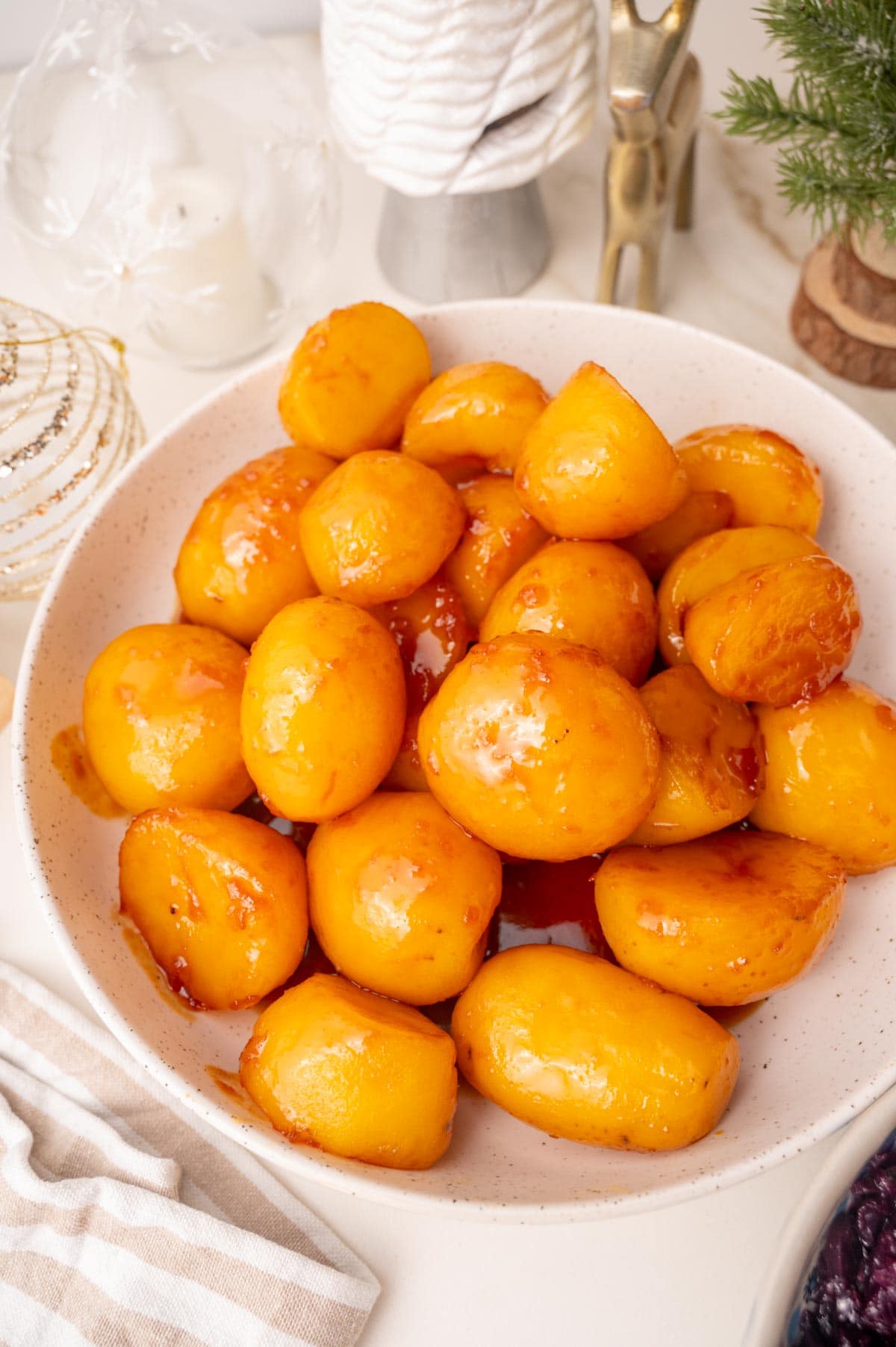
Danish caramel potatoes (brunede kartofler) are small boiled potatoes coated in a glossy sugar–butter caramel. They’re sweet, buttery, and a classic Danish Christmas side dish, traditionally served alongside roast duck and braised red cabbage.
Ingredients
Here’s what you need to make Danish caramel potatoes:
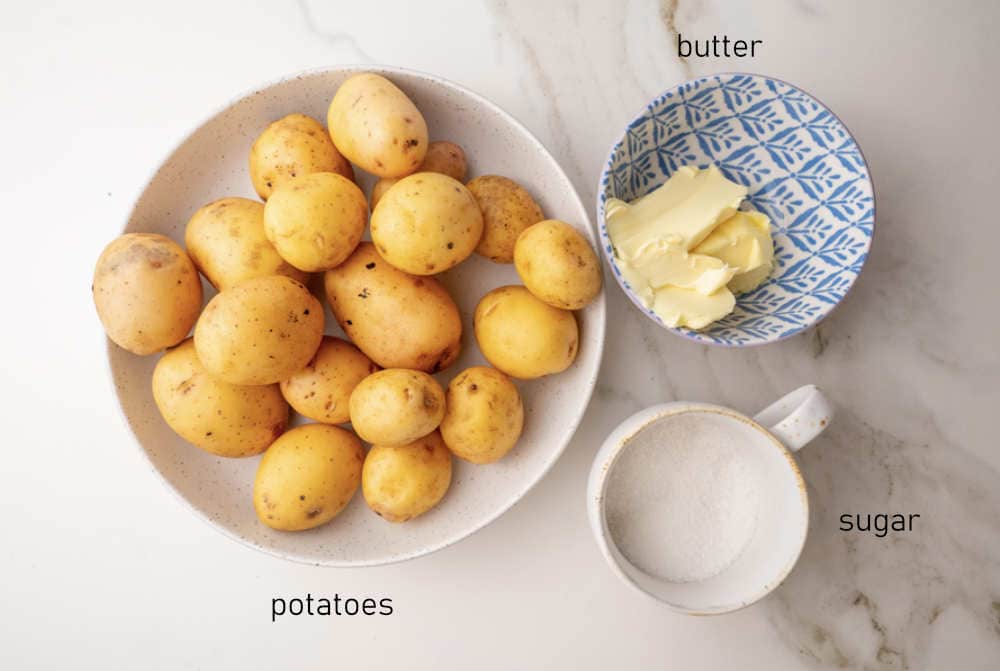
This is such an easy recipe that requires only 3 ingredients, but it is more technique-sensitive.
You can add less sugar; you will have less sauce for the potatoes, but I think a Christmas side dish is not the time to count the calories!
Additionally, you can sprinkle your caramel potatoes with flaky sea salt, it is not traditional, but caramel + salt ? You must know it will taste amazing!
How to make it step-by-step
Cook potatoes
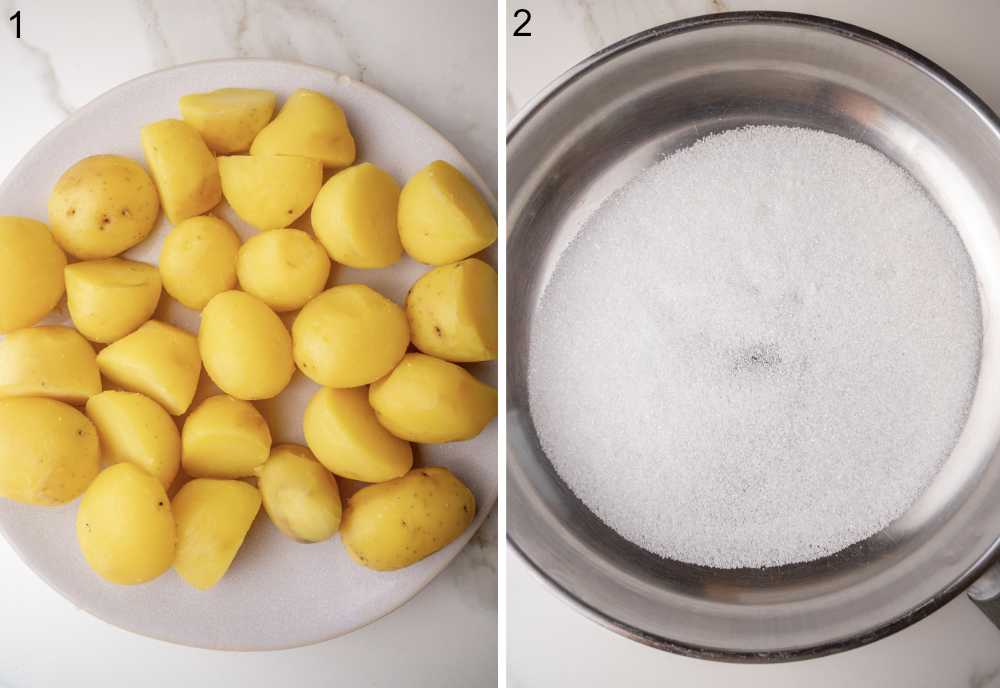
STEP 1: The best potatoes for this recipe are small and similar in size, but if you have a mix of potatoes, cut the larger ones in half so they cook evenly.
Cook the potatoes (2 pounds (900g) in their skins in a large pot of well-salted water until just tender when pierced with a knife, then drain them and let them cool until they are easy to handle. This will take about 10–20 minutes, depending on the size of the potatoes. Try not to overcook them; they will be cooked in the caramel sauce later for 10–15 minutes, so you can slightly undercook them.
Peel the potatoes and place them on paper towels to dry and cool completely. If the potatoes are wet, the caramel sauce won’t stick as well.
If you have overcooked the potatoes and they have an uneven surface with mashed potato pieces on top, scrape them with a paper towel until the surface of the potatoes is clean (this is an optional step, but it makes for a nicer-looking, cleaner caramel sauce).
If you are not caramelizing them right away, chill the peeled potatoes, then bring them back toward room temperature before cooking so they are not ice-cold when they go into the pan.
Make the caramel
STEP 2: Choose a wide, heavy-bottomed skillet that can hold all the potatoes in (almost) a single layer so they can roll around in the caramel easily.
Sprinkle the sugar (1/2 cup (100g) in an even layer over the bottom of the dry skillet and place it over medium to medium-low heat.
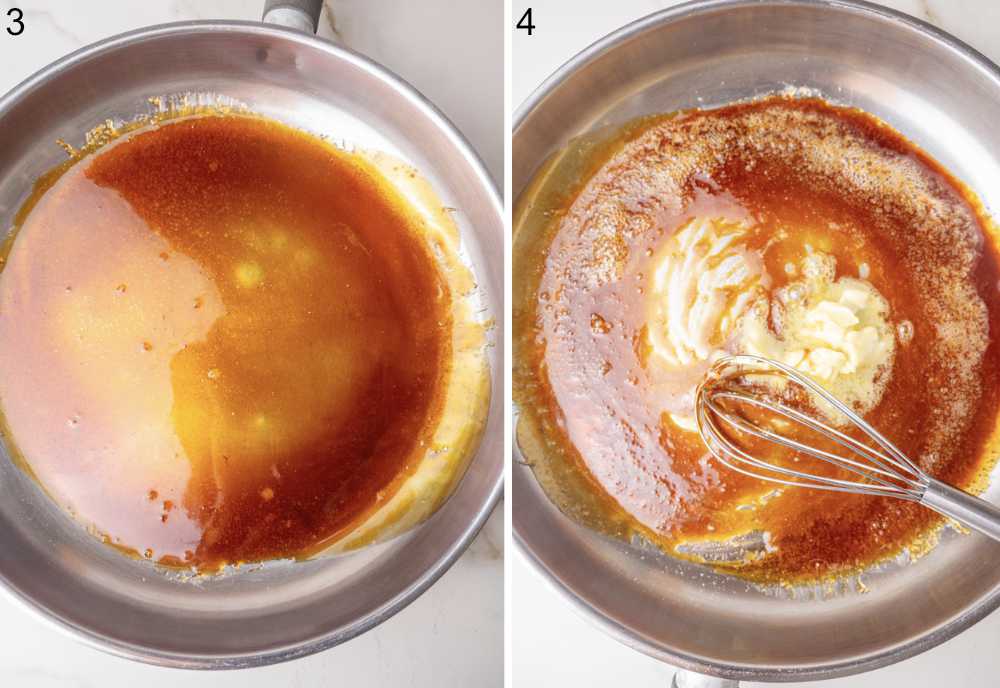
STEP 3: Let the sugar melt without stirring at first, gently swirling the pan from time to time so the sugar melts evenly.
When most of the sugar is liquid, you can use a heatproof spatula to very gently push melted sugar toward any dry spots, but avoid vigorous stirring so you do not drag crystals into the melted sugar; keep cooking until all the sugar is melted and a light to medium amber color (do not wait until it is dark brown).
STEP 4: Add the butter (1/4 cup (60g)) gradually, whisking after each addition, until incorporated.
Coat the potatoes in the caramel sauce
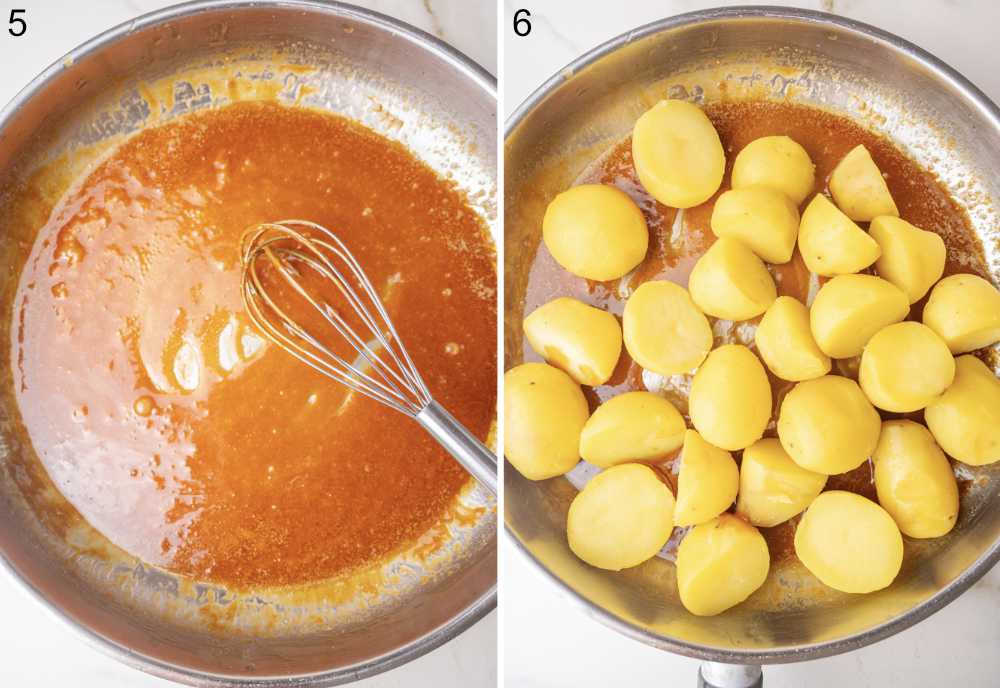
STEP 5: Add 1 tablespoon of boiling water if the mixture is not smooth and glossy.
STEP 6: Add the peeled, cooled potatoes gently to the pan in a single layer as much as possible; the caramel may thicken or seize a little when the potatoes go in, but this will smooth out once they heat up, so just keep the heat on low and start gently rolling the potatoes around.
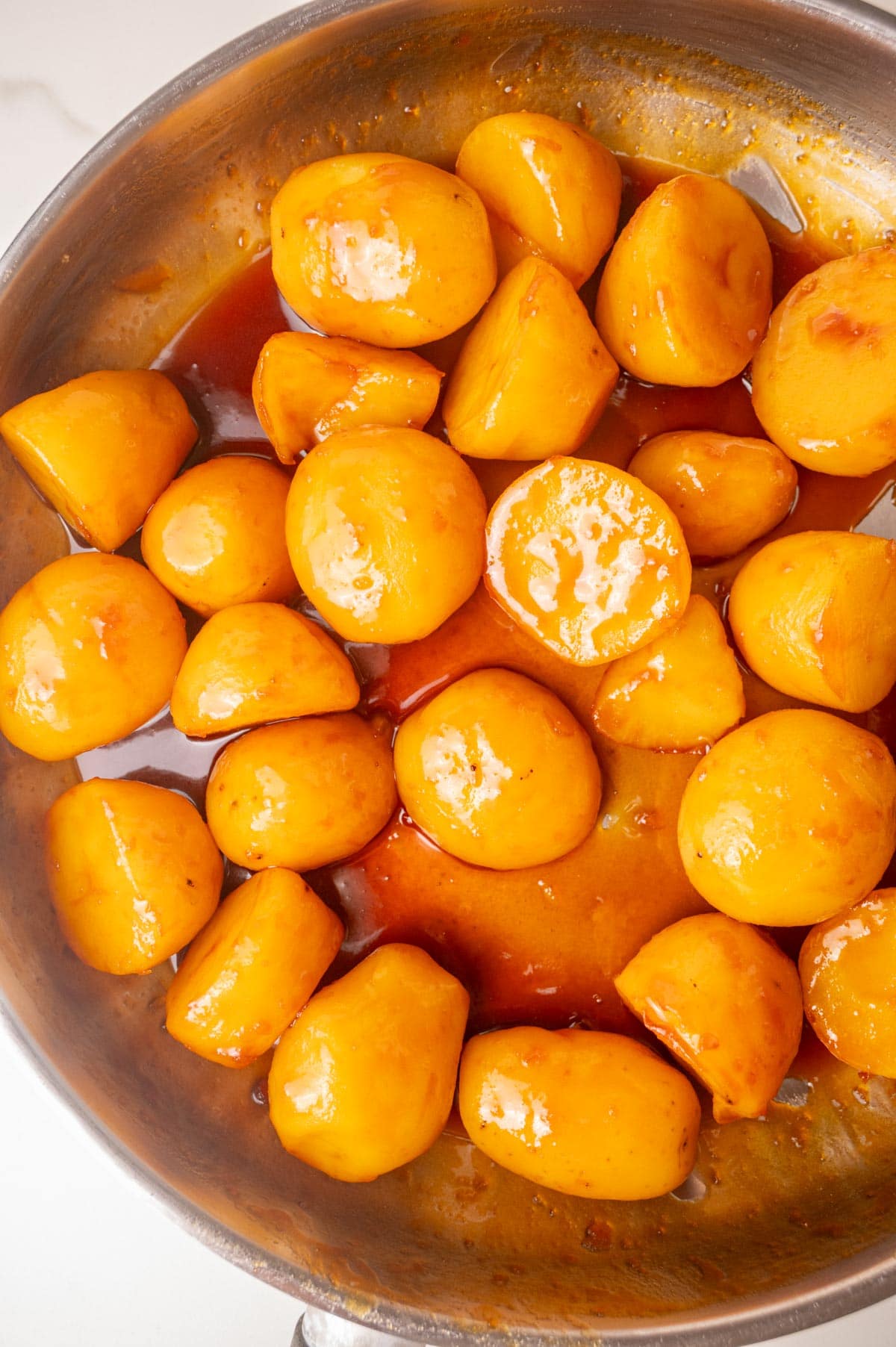
Cook the potatoes in the caramel over low to medium-low heat for about 10–15 minutes, turning and shaking the pan often so the potatoes roll through the caramel and get coated on all sides; adjust the heat so the caramel is bubbling gently around the potatoes but not burning on the bottom.
As the potatoes cook, the water in the caramel sauce will slowly evaporate and the sauce will thicken and go from a thin syrup to a thicker, shiny glaze that clings to the potatoes; if at any point the caramel seems too thick or starts to look dull, you can stir in 1–2 more tablespoons of very soft butter or 1–2 teaspoons of boiling water to loosen and gloss it.
Stop cooking when the potatoes are evenly coated in a deep golden-brown, shiny layer of caramel, and there is only a little loose sauce in the pan; remove the pan from the heat so the caramel does not continue to cook and harden.
Serve the caramel potatoes right away while they are hot and glossy; if they sit for a while, you can gently rewarm them over very low heat, rolling them carefully in the pan to soften the caramel again without letting it burn.
Sprinkle flaky sea salt over the potatoes, if using.
Enjoy!
Storage and make-ahead
Danish caramel potatoes taste best freshly made, but you can cook the potatoes in their skins, peel them, and store them (uncaramelized) in the fridge for up to 2 days. Make sure they’re dry on the surface before you add them to the caramel.
Leftover caramel potatoes can be stored in an airtight container in the fridge for up to 2 days; reheat them gently in a wide pan over low heat, adding a tiny splash of water or a small knob of butter to loosen the caramel if needed. I don’t recommend freezing them, as the texture of the potatoes changes.
More Danish Christmas Recipes
- Danish Christmas Duck
- Danish Red Cabbage
- Risalamande (rice pudding with cherry sauce)
- Glogg – Danish mulled wine
- Aebleskiver – Danish pancake balls
Did you make this recipe? RATE THE RECIPE or tell me in the COMMENTS how you liked it! You can also add a photo of your dish. It would make me very happy and will help other readers. Thank you!!
Brunede Kartofler – Danish Caramel Potatoes

Ingredients
- 2 pounds (900g) small waxy potatoes all about the same size (for example Yukon Gold or fingerling potatoes)
- ½ cup (100g) sugar
- ¼ cup (60g) soft butter
- Flaky sea salt optional, to garnish
- 1 tablespoon of boiling water if needed
Would you like to save this?
Instructions
Cook potatoes:
- The best potatoes for this recipe are small and similar in size, but if you have a mix of potatoes, cut the larger ones in half so they cook evenly.
- Cook the potatoes in their skins in a large pot of well-salted water until just tender when pierced with a knife, then drain them and let them cool until they are easy to handle. This will take about 10–20 minutes, depending on the size of the potatoes. Try not to overcook them; they will be cooked in the caramel sauce later for 10–15 minutes, so you can slightly undercook them.2 pounds (900g) small waxy potatoes
- Peel the potatoes and place them on paper towels to dry and cool completely. If the potatoes are wet, the caramel sauce won’t stick as well.
- If you have overcooked the potatoes and they have an uneven surface with mashed potato pieces on top, scrape them with a paper towel until the surface of the potatoes is clean (this is an optional step, but it makes for a nicer-looking, cleaner caramel sauce).
- If you are not caramelizing them right away, chill the peeled potatoes, then bring them back toward room temperature before cooking so they are not ice-cold when they go into the pan.
Make the caramel:
- Choose a wide, heavy-bottomed skillet that can hold all the potatoes in (almost) a single layer so they can roll around in the caramel easily.
- Sprinkle the sugar in an even layer over the bottom of the dry skillet, place it over medium to medium-low heat, and let the sugar melt without stirring at first, gently swirling the pan from time to time so the sugar melts evenly.½ cup (100g) sugar
- When most of the sugar is liquid, you can use a heatproof spatula to very gently push melted sugar toward any dry spots, but avoid vigorous stirring so you do not drag crystals into the melted sugar; keep cooking until all the sugar is melted and a light to medium amber color (do not wait until it is dark brown).
- Add the butter gradually, whisking after each addition, until incorporated. Add 1 tablespoon of boiling water if the mixture is not smooth and glossy.¼ cup (60g) soft butter
Coat the potatoes in the caramel sauce:
- Add the peeled, cooled potatoes gently to the pan in a single layer as much as possible; the caramel may thicken or seize a little when the potatoes go in, but this will smooth out once they heat up, so just keep the heat on low and start gently rolling the potatoes around.
- Cook the potatoes in the caramel over low to medium-low heat for about 10–15 minutes, turning and shaking the pan often so the potatoes roll through the caramel and get coated on all sides; adjust the heat so the caramel is bubbling gently around the potatoes but not burning on the bottom.
- As the potatoes cook, the water in the caramel sauce will slowly evaporate and the sauce will thicken and go from a thin syrup to a thicker, shiny glaze that clings to the potatoes; if at any point the caramel seems too thick or starts to look dull, you can stir in 1–2 more tablespoons of very soft butter or 1–2 teaspoons of boiling water to loosen and gloss it.
- Stop cooking when the potatoes are evenly coated in a deep golden-brown, shiny layer of caramel and there is only a little loose sauce in the pan; remove the pan from the heat so the caramel does not continue to cook and harden.
- Serve the caramel potatoes right away while they are hot and glossy; if they sit for a while, you can gently rewarm them over very low heat, rolling them carefully in the pan to soften the caramel again without letting it burn.
- Sprinkle flaky sea salt over the potatoes, if using.
- Enjoy!
No Comments