

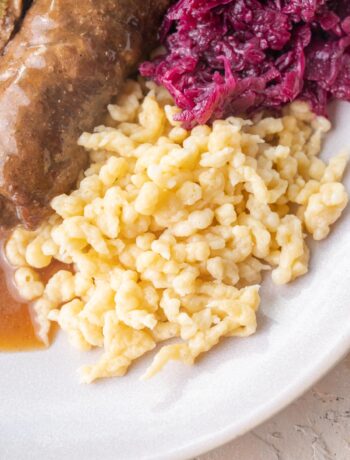
Sauerbraten is a classic German pot roast made from beef marinated for several days in red wine and vinegar, then slowly braised until very tender. The marinade is turned into a silky sweet-and-sour gravy, thickened and flavored with crumbled gingerbread cookies and raisins. This cozy dish is perfect for Sunday dinner or holidays and tastes even better the next day with Spätzle and red cabbage.
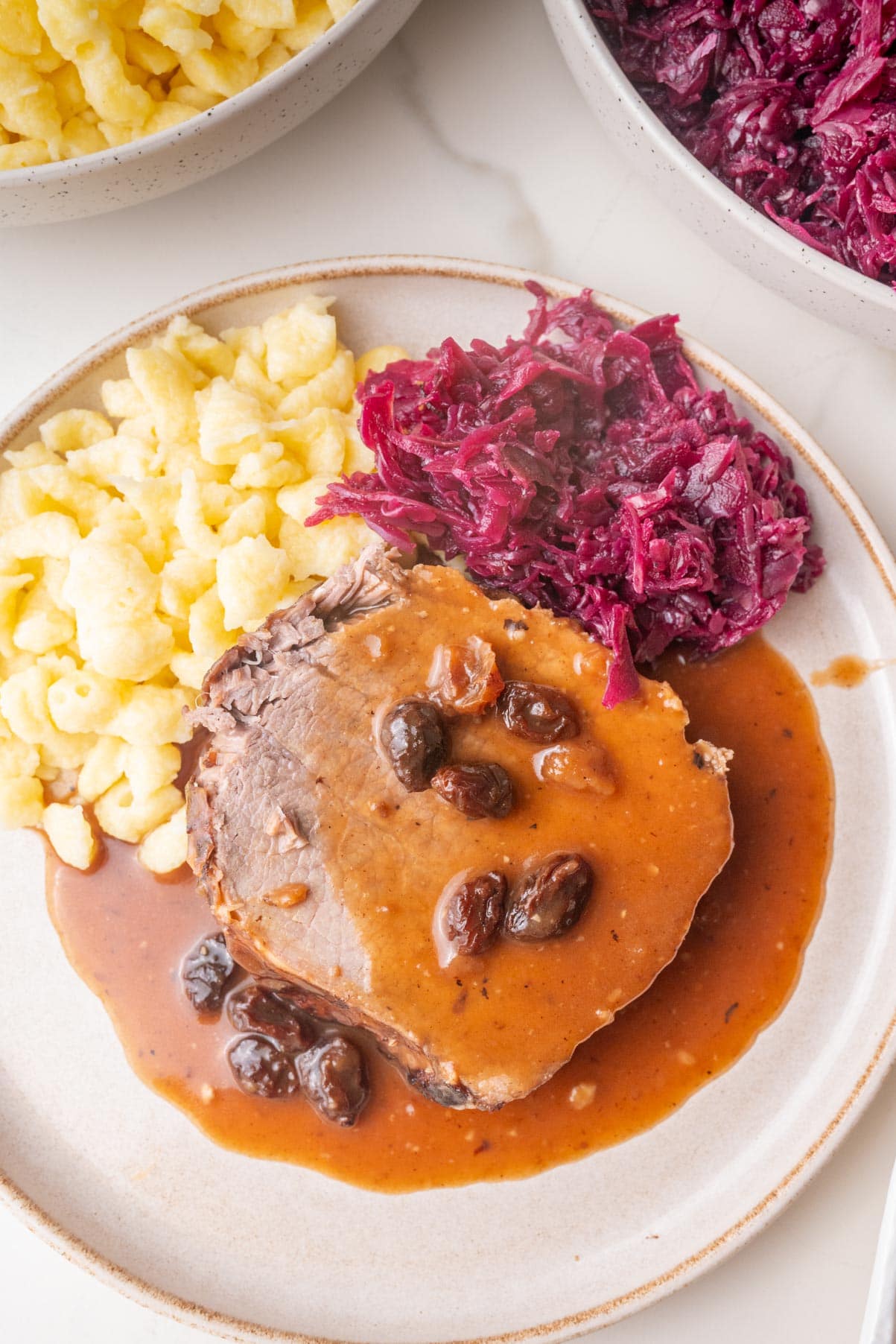
What is Sauerbraten
Sauerbraten is one of the oldest German meat dishes, with roots that probably go back to medieval times, when meat was preserved for days in an acidic brine of vinegar and wine before cooking. The long marinating time helped keep the meat from spoiling and also tenderized tougher, cheaper cuts, which made the dish popular with ordinary families as well as for Sunday and holiday meals.
Over time, many regional versions developed: in the Rhineland the sauce is often sweet-and-sour and thickened with Lebkuchen or spice cookies and raisins, while other areas keep it more savory and don’t use cookies at all. There are even historical recipes using horse meat instead of beef, but nowadays sauerbraten is almost always made with beef and is considered a classic comfort dish of German home cooking. The name Sauerbraten literally means “sour roast” and refers to the pleasantly tangy flavor of the marinated meat and gravy.
Ingredients
Here’s what you need for the marinade:
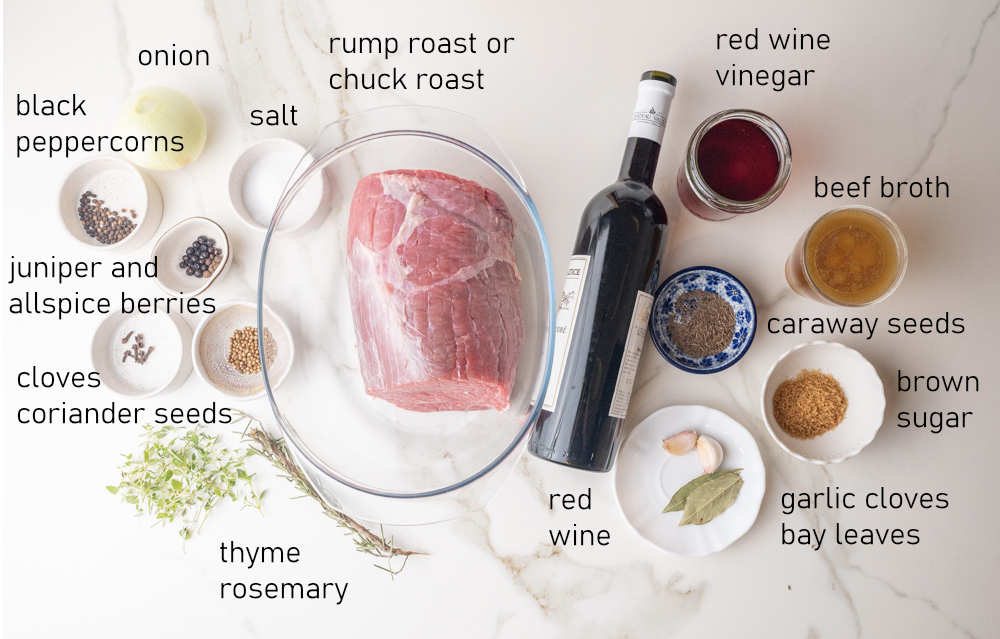
Beef roast: Traditionally, sauerbraten is made with a boneless beef roast from the leg, such as bottom round, rump, or top round – these cuts are quite lean, hold their shape, and slice beautifully after braising. You can also use a chuck roast, which has more fat and connective tissue and turns extra tender and juicy. All of these cuts are made for slow, moist cooking, so they soak up the marinade well and don’t dry out.
Red wine, vinegar, and broth: Red wine adds depth, while red wine vinegar gives the typical sour note and gently helps tenderize the meat. In the past, the acidic marinade also helped preserve meat for several days before refrigeration. Beef broth rounds out the flavor – store-bought is fine, but homemade beef broth tastes richer and cleaner.
Onion, garlic, herbs, and spices: Onion, garlic, thyme, rosemary, bay leaves, peppercorns, juniper, allspice, cloves, coriander, caraway, and a bit of brown sugar slowly season the meat and marinade.
Root vegetables in the marinade: Some recipes add chopped carrots, celeriac, leeks, and extra onions straight to the marinade. I don’t find this very useful – they don’t give much flavor to the liquid, and they only really start to matter later in the oven when they cook into the sauce.
Here’s what you need to finish the dish and for the sauce:
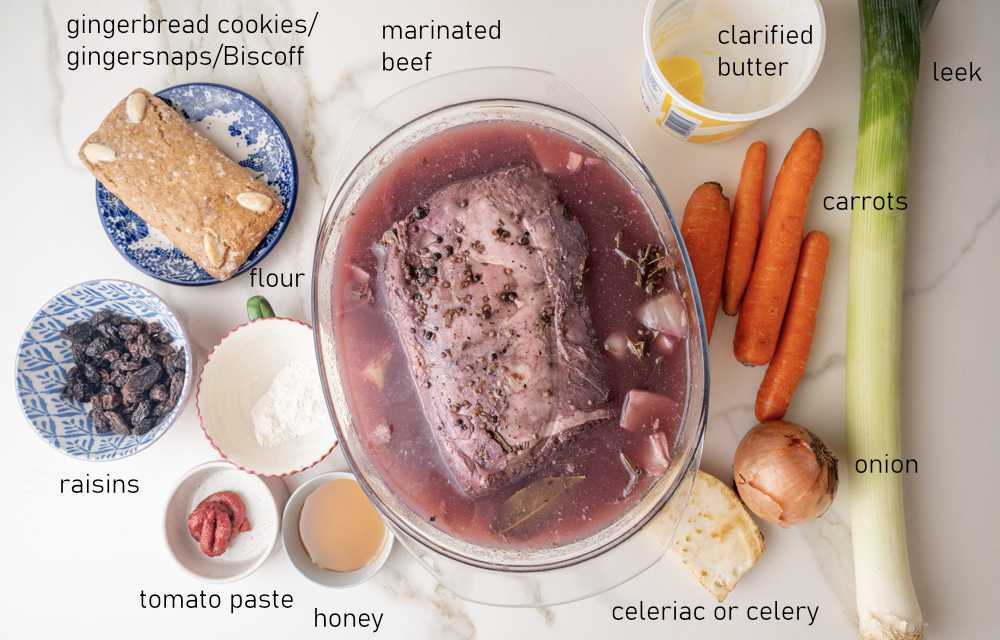
Vegetables: Onion, carrots, leek, and celeriac or celery are sautéed in clarified butter and then braised with the meat. Here they finally have time to soften and give a lot of flavor and natural sweetness to the gravy.
Tomato paste and flour: Tomato paste adds color and a little umami; a small amount of flour helps the sauce thicken.
Gingerbread or spice cookies: Crumbled Lebkuchen (or less known Printen cookies) are the traditional choice for thickening and seasoning the sauce. You can also use gingersnaps, Biscoff, or Speculaas – gingersnaps give more ginger heat, Biscoff adds a caramel note, and Speculaas bring extra warm spices. A mix (for example, Lebkuchen + Biscoff) lets you adjust how sweet and spiced the gravy will be.
Raisins, honey, and molasses: Raisins add small bursts of sweetness, while honey and a little molasses balance the vinegar and help the sauce become dark, glossy, and rich.
How to make it step-by-step
Marinate the meat
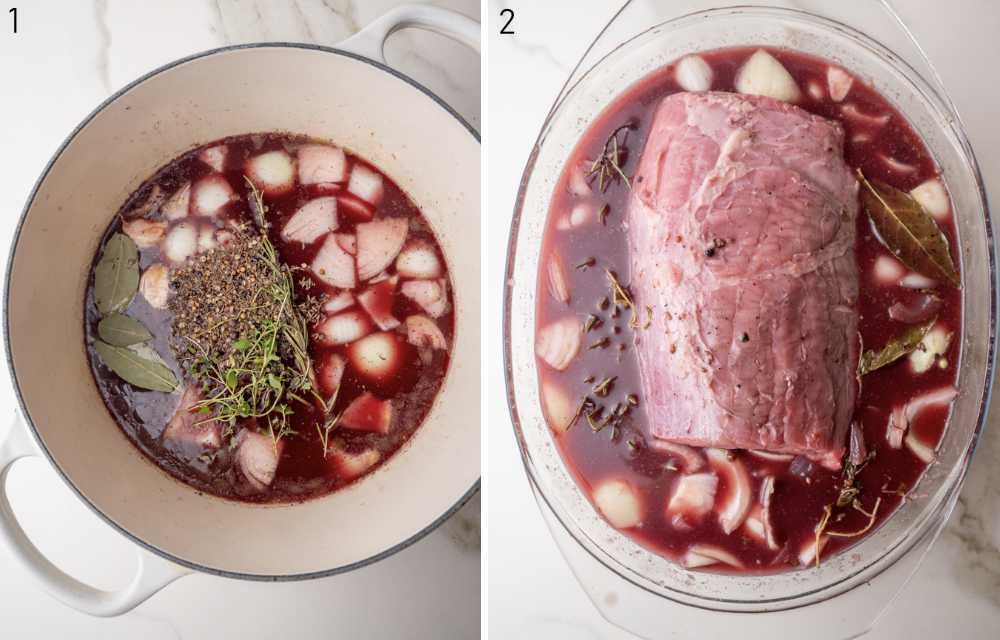
STEP 1: Prepare the meat – trim any tough silver skin and place it in a baking dish that is just a little bit bigger than the piece of meat (big enough for the meat and marinade but not too big; the meat should be covered at least ¾ of the way with the marinade, but preferably all the way).
Prepare the marinade: Add all the ingredients for the marinade to a saucepan, bring to a boil, then simmer for 15–20 minutes.
STEP 2: Marinate: Let cool completely, then pour over the meat. Cover and marinate for 3–7 days in the fridge. If the meat is not completely covered with the marinade, turn it over every 12 hours. You can also put something heavy (like a small baking dish) on top of the meat to keep it submerged in the marinade. I sometimes add some additional onions and carrots to the marinade just to keep the level of the liquid higher and cover more of the meat.
Brown and braise the beef
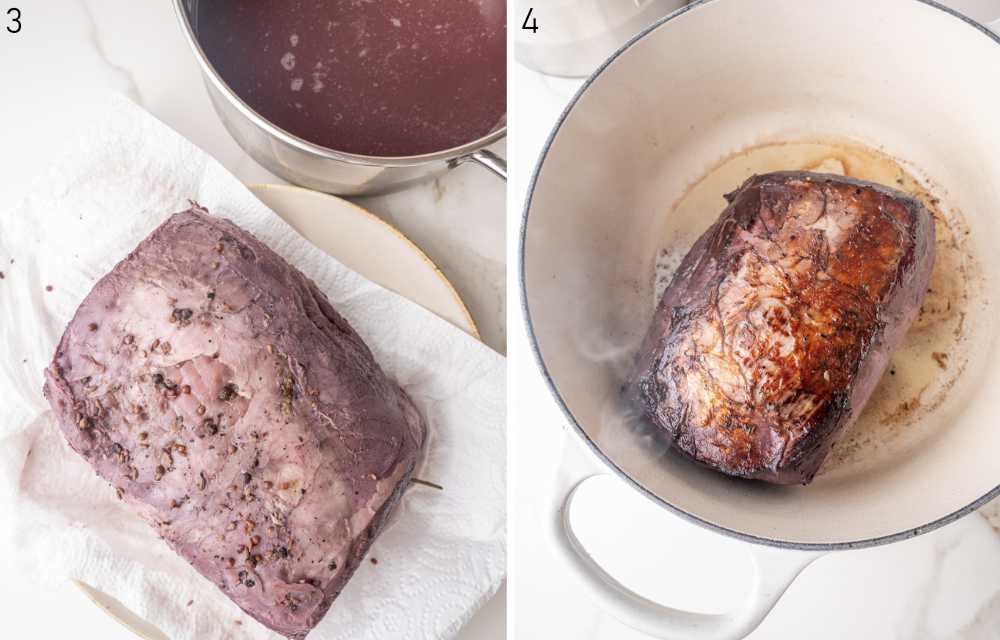
STEP 3: On the day of preparing the dish:
Preheat the oven to 300°F (150°C).
Take the meat out of the marinade and pat it dry with paper towels.
Strain the marinade, discarding all the spices and vegetables.
STEP 4: Heat 2–3 tablespoons of clarified butter or vegetable oil in a Dutch oven or another heavy pot. Brown the meat on all sides, then take it out of the pot.
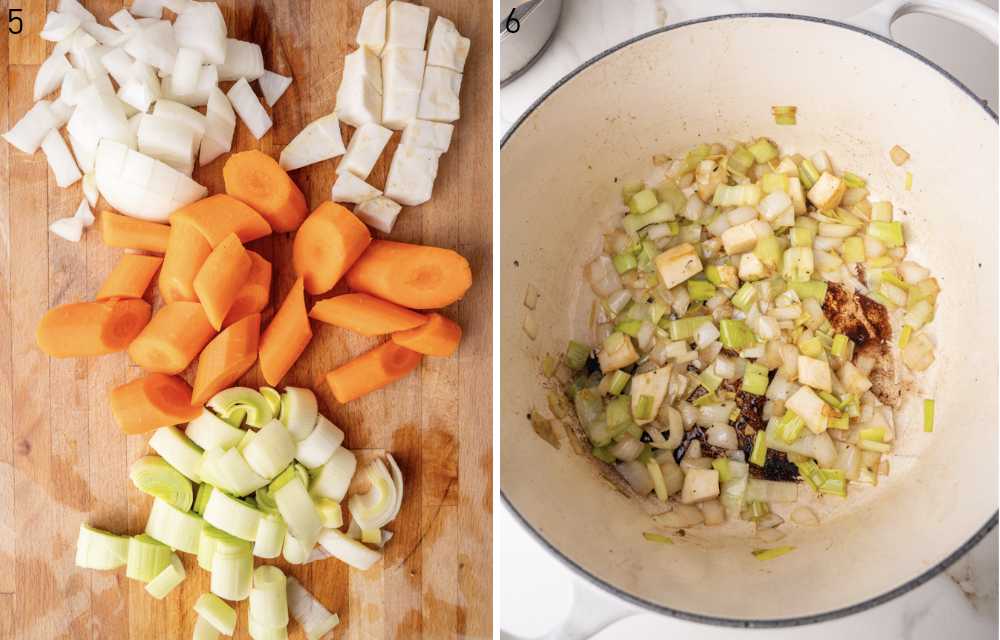
STEP 5: Roughly chop the onions, celeriac/celery ribs, and leek; cut the carrots into large chunks.
STEP 6: Add the onions, celeriac/celery, and leek, and another tablespoon of butter. Cook for a couple of minutes, until softened.
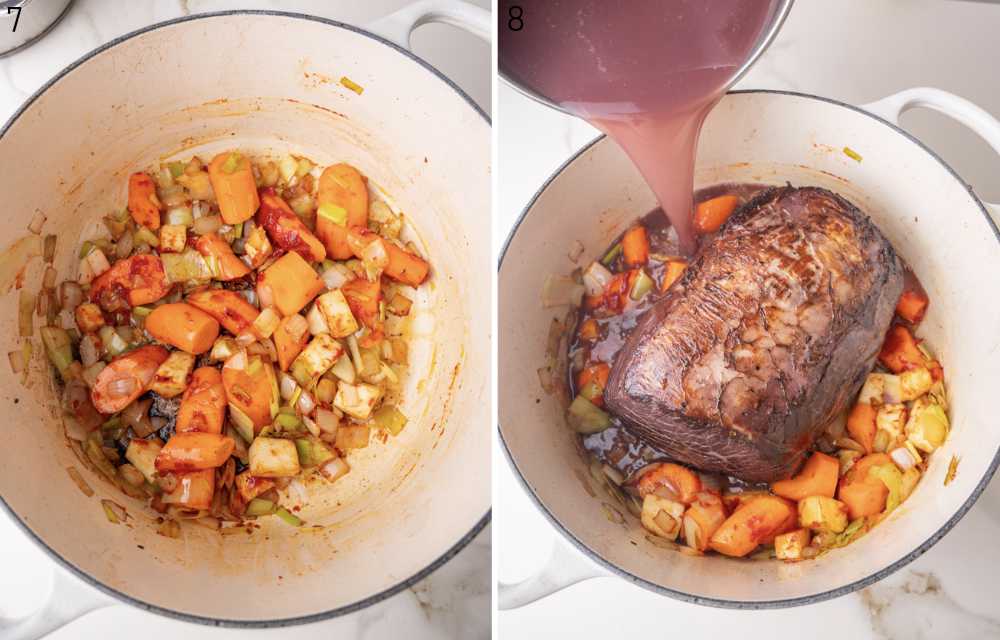
STEP 7: Add the carrots and stir in the tomato paste.
STEP 8: Add the meat back to the pot, then pour in the strained marinade. Bring to a boil, then cover the pot and put it in the oven.
Bake for 3–4 hours, or until the meat is very soft, about 2 hours per 2.2 pounds (1kg) of meat.
Make the sauce and serve
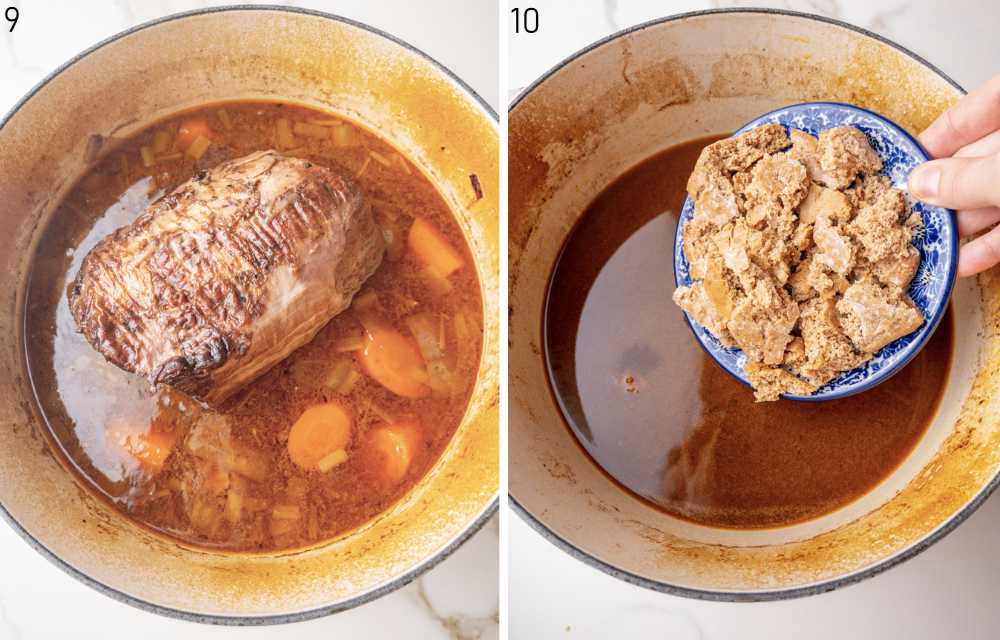
STEP 9: Remove the pot from the oven. Transfer the meat to a plate, cover loosely with foil, and keep warm.
Strain the cooking liquid into a large pot/bowl, pressing on the vegetables to extract as much liquid as possible. Discard the vegetables, except the carrots (you can serve them with the roast).
Pour the strained liquid back into the pot and bring to a gentle simmer.
STEP 10: Crumble the gingerbread cookies/gingersnaps/Biscoff into the pot, add the honey and molasses, and cook for about 10 minutes, stirring often, until the cookies dissolve and the sauce thickens slightly. You can mix the sauce with a hand/immersion blender for it to be completely smooth. Then add the raisins.
In a small bowl, whisk the flour with a tablespoon of cold water until smooth, then slowly whisk this mixture into the simmering sauce (adding flour may not be necessary if you have used more cookies and they have already thickened the sauce enough). Cook for 5–10 minutes more, stirring, until the sauce is glossy and has the consistency you like.
Season the sauce with salt and pepper to taste. If it’s too sour, add a bit more honey; if it’s too sweet, add a small amount of vinegar.
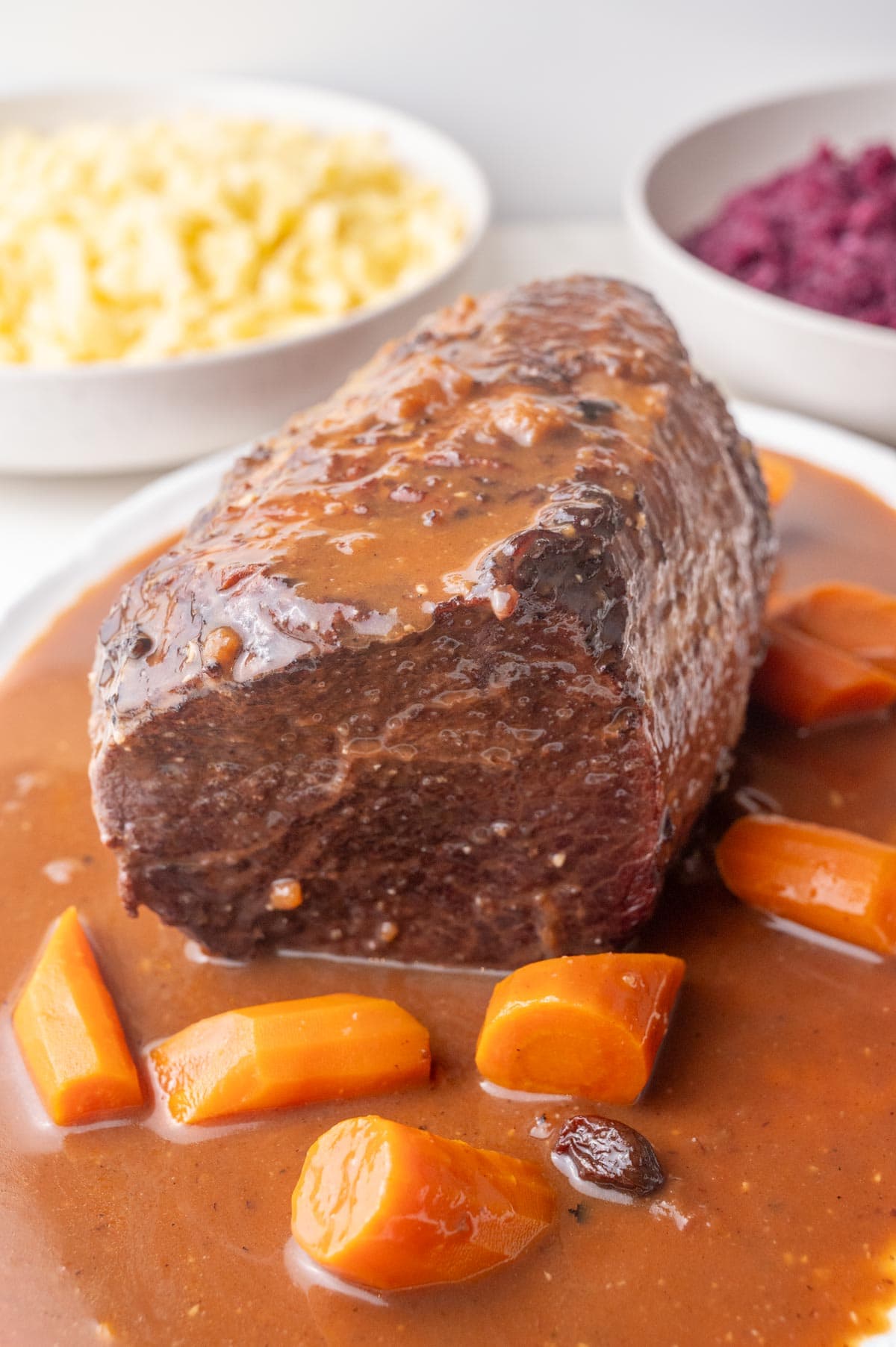
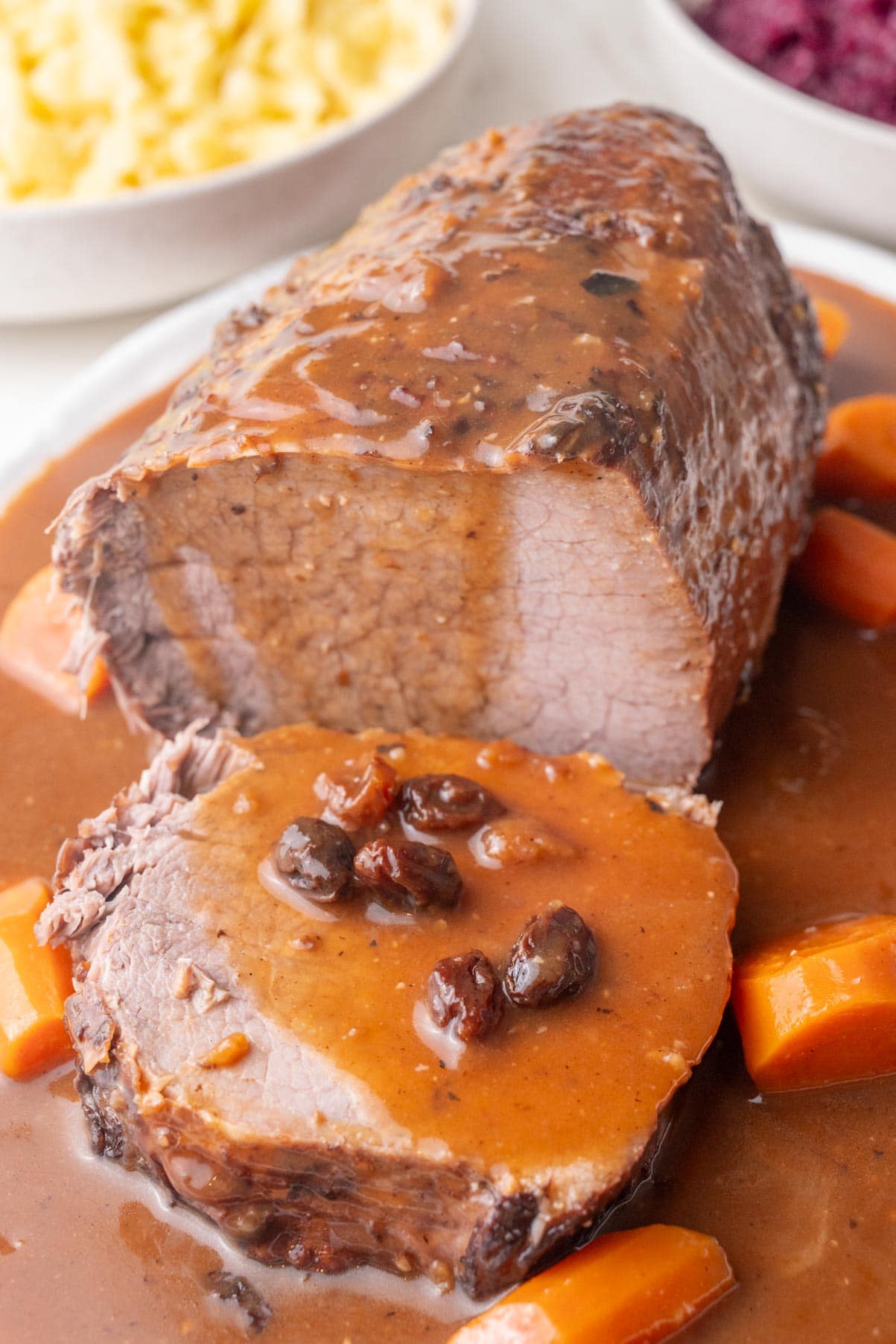
Slice the meat into thin slices against the grain and serve with plenty of sauce.
Enjoy!
Storage
Sauerbraten keeps very well and actually tastes even better the next day. Let the meat and sauce cool completely, then store them in an airtight container in the fridge for up to 4 days. If the sauce thickens too much in the fridge, just thin it with a splash of water or broth when reheating.
To reheat, warm the sliced meat gently in the sauce on low heat on the stove.
Serving suggestions
Side dish:
- Spätzle
- German Potato Dumplings (Kartoffelknödel)
- German Bread Dumplings (Semmelknödel)
- Sour cream mashed potatoes
- German potato salad
Salad:
Did you make this recipe? RATE THE RECIPE or tell me in the COMMENTS how you liked it! You can also add a photo of your dish. It would make me very happy and will help other readers. Thank you!!
Sauerbraten (German Pot Roast)
Ingredients
For the marinade:
- 3 ½–4 pounds (1.6–1.8kg) boneless beef roast such as bottom round, rump, top round, or chuck
- 3 cups (750ml/1 bottle) red wine
- 1 cup (240ml) red wine vinegar
- 1 cup (240ml) beef broth
- 1 large onion
- 3 cloves garlic
- 3 bay leaves
- 1 teaspoon black peppercorns
- 1 teaspoon juniper berries
- 1 teaspoon caraway seeds
- 1 teaspoon coriander seeds
- ½ teaspoon cloves
- 5 allspice berries
- 1 tablespoon brown sugar
- A couple of springs thyme
- 1-2 sprigs rosemary
- 1 tablespoon salt + 1 teaspoon if using homemade, unsalted broth
- Additional 1-2 onions + 3-4 carrots if your roast is large see notes
For the sauce:
- 3-4 tablespoons clarified butter or vegetable oil
- 1 onion
- Small piece of celeriac or 1-2 celery ribs
- ½ leek
- 4 carrots
- 1 tablespoon tomato paste
- Lebkuchen and/or spice cookies such as gingersnaps, Biscoff, Speculaas, I used 3 ounces (85g) Lebkuchen cookies and 2 Biscoff cookies
- 1/3 cup raisins
- ½ tablespoon flour
- 1 tablespoon honey
- 1 teaspoon molasses just for the color, so you can also use honey or sugar
- Salt and pepper to taste
Would you like to save this?
Instructions
Marinate the meat:
- Prepare the meat – trim any tough silver skin and place it in a baking dish that is just a little bit bigger than the piece of meat (big enough for the meat and marinade but not too big; the meat should be covered at least ¾ of the way with the marinade, but preferably all the way).
- Add all the ingredients for the marinade to a saucepan, bring to a boil, then simmer for 15–20 minutes.
- Let cool completely, then pour over the meat. Cover and marinate for 3–7 days in the fridge. If the meat is not covered completely with the marinade, turn it over every 12 hours. You can also put something heavy (like a small baking dish) on top of the meat to keep it submerged in the marinade. I sometimes add some additional onions and carrots to the marinade just to keep the level of the liquid higher and cover more of the meat.
On the day of preparing the dish:
- Preheat the oven to 300°F (150°C).
- Take the meat out of the marinade and pat dry with paper towels.
- Strain the marinade, discarding all the spices and vegetables.
- Roughly chop the onions, celeriac/celery ribs, and leek; cut the carrots into large chunks.
- Heat 2–3 tablespoons of clarified butter in a Dutch oven or another heavy pot. Brown the meat on all sides, then take it out of the pot.
- Add the onions, celeriac/celery, and leek and another tablespoon of butter. Cook for a couple of minutes, until softened.
- Add the carrots and stir in the tomato paste.
- Add the meat back to the pot, then pour in the strained marinade. Bring to a boil, then cover the pot and put it in the oven.
- Bake for 3–4 hours, or until the meat is very soft, about 2 hours per 2.2 pounds (1kg) of meat.
Make the sauce:
- Remove the pot from the oven. Transfer the meat to a plate, cover loosely with foil, and keep warm.
- Strain the cooking liquid into a large pot/bowl, pressing on the vegetables to extract as much liquid as possible. Discard the vegetables, except the carrots (you can serve them with the roast).
- Pour the strained liquid back into the pot and bring to a gentle simmer.
- Crumble the gingerbread cookies/gingersnaps/Biscoff into the pot, add the honey, and molasses, and cook for about 10 minutes, stirring often, until the cookies dissolve and the sauce thickens slightly. You can mix the sauce with a hand/immersion blender for it to be completely smooth. Then add the raisins.
- In a small bowl, whisk the flour with a tablespoon of cold water until smooth, then slowly whisk this mixture into the simmering sauce (adding flour may be not necessary if you have used more cookies and they already thickened the sauce enough). Cook for 5–10 minutes more, stirring, until the sauce is glossy and has the consistency you like.
- Season the sauce with salt and pepper to taste. If it’s too sour, add a bit more honey; if it’s too sweet, add a small amount of vinegar-
- Slice the meat into thin slices against the grain and serve with plenty of sauce.
- Enjoy!

No Comments